
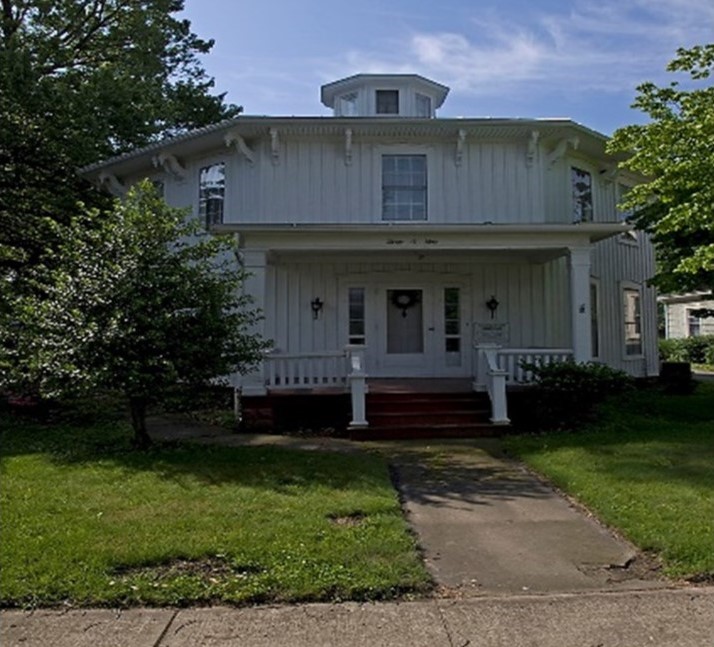
Welcome to Octagon Ohio History, brought to you from the David Cummins Octagon House in Conneaut, Ohio. Ashtabula County and all of Ohio has a fun and fascinating history, so let’s explore it together. Our view from the cupola gives us a bird’s eye view of the state and we can peek into all aspects of its history. Come along for an exciting history adventure!
Ghosts, goblins, ghouls, and other spooky minions of the worlds beyond our senses take center stage on Halloween, producing Halloween costumes, haunted houses, paranormal investigations, ghost tours and supersized paranormal parties and experiences.
Ohio Ghosts Whisper to Us on Halloween
We mortals are so busy celebrating and recreating the world of ghosts, imagining what they are like, and listening and looking for them in haunted houses that we really don’t hear them or their stories, not even in Ohio which is blessed with multitudes of multi-tasking and talented ghosts. For a moment, let’s stop and listen to some of
the tales of ghosts in Ohio who can be found in cemeteries, houses, hotels, seminaries, taverns, parks, libraries, and museums, just to name just a few haunted places.
Ghosts have to be approached with imaginations, the same imaginations that non believers in ghosts accuse believers of over actively using. Ghost stories are people and place stories. Ghost stories are created from people living everyday lives and leaving imprints in the ether of time and space after their mortal lives have moved on to other dimensions.
Cemetery Ghosts

During a blinding blizzard on December 29, 1876, the Lakeshore and Southern Michigan’s Pacific Express inched its way across a railroad trestle over the Ashtabula River gorge. One of the two engines reached the other side of the bridge, but when the bridge collapsed, the other engine and eleven cars tumbled into the gorge 1,000 feet below. Approximately 92 people perished from hypothermia, injuries from the collision, or from the fire ignited from the stoves and oil lamps used to heat and light the railroad cars.
Cemeteries are the logical places to listen to ghosts and learn history as well. Andrew Skarupa, once superintendent of Chestnut Grove Cemetery in Ashtabula, Ohio, experienced one of his other worldly encounters with the ghost of Charles Collins. Twenty-five of the approximately 92 victims of the Ashtabula train wreck, one of the major disasters of the Nineteenth Century, play important roles in the story.
The unrecognizable remains of twenty-five of the victims were buried in a mass grave in Chestnut Grove Cemetery, along with Charles Collins, the engineer and architect who had helped build the bridge over the Ashtabula River gorge. Lakeshore Railroad President Amasa Stone and Charles Collins had reluctantly agreed to build the bridge over the Ashtabula River gorge out of iron instead of the traditional and time-tested wood.
A coroner’s jury criticized the bridge design and alleged that a competent bridge engineer inspection would have pinpointed the design defects in the bridge, holding Charles Collins and Amasa Stone accountable for its failure. After the investigative jury heard his testimony, Charles Collins wended his way home and shot himself in the head. He is buried in Chestnut Grove Cemetery, just several feet from the mass grave of the Ashtabula disaster victims.
Unlike other cemetery visitors, Andrew Skarupa didn’t see Charles Collins pacing in front of the mass grave of the victims or report that he saw Collins burying his head in his hands and crying, “I’m sorry, I’m sorry,” over and over. But Andrew experienced his own ghost sightings, including a woman, and an old man who wore a top hat and searched for his grandson. Besides human ghosts, Andrew reported seeing a horse, a dog, and a chicken. He noted, “It was funny really. I had seen a few other ghosts, but to turn around and see a chicken, well let’s just say some people didn’t believe me!1
1“The Spirit of Halloween.” Ashtabula Star Beacon October 31, 2004, page 1.
Johnson’s Island Confederate Cemetery
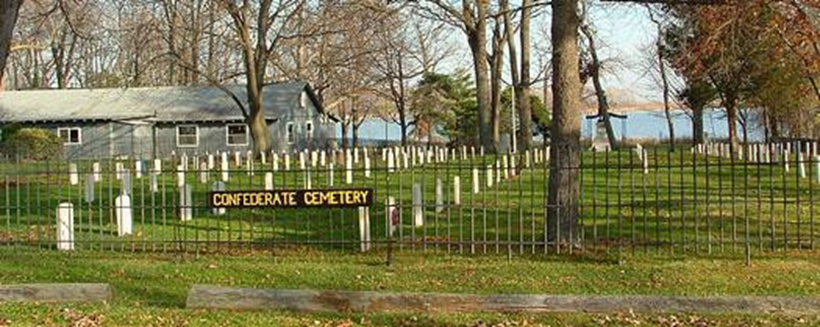
The United States government used Johnson’s Island, a 300-acre dot of land in the Sandusky Bay of Lake Erie and just three miles from the city of Sandusky, Ohio, as a Union prison. Originally the prison had been built for captured Confederate officers, but eventually all ranks of Confederate prisoners, political prisoners, and spies were imprisoned there during the Civil War. Tradition has it that 209 Confederate soldiers rest in the cemetery, but historical research suggests that the cemetery doesn’t contain all of the soldiers’ remains, but instead they are scattered around the island. Recent archaeological research indicates that over 100 additional unmarked graves can be found throughout the island.
Ghosts of Confederate soldiers, each with a life story, no matter how brief, wander Johnson’s Island and the cemetery is the stage for phantom battles, featuring gunshots, Rebel Yells, cries of the wounded, and the cadences of the marching feet of soldiers. Many participants swear that ghostly soldiers march along with their living comrades during the Memorial Day parades on Johnson’s Island. 2
His fellow laborers accidentally left an Italian woodcutter in the Confederate Cemetery stranded overnight when they took their boat back to Sandusky. Daunted but determined, he managed to build a fire and thank his good fortunado that he had some leftover sandwiches and beer from his lunch. He managed to collect enough leaves and branches to make a reasonably soft bed,
When he snugged into his makeshift bed and spread his jacket over him, the Italian woodcutter felt comfortable enough to wave goodnight to The Lookout and tell him to watch over the cemetery and over himself, the stranded woodcutter, while he slept. He stared at The Lookout, wondering about life in the South and the lives of the men he guarded. Had their dying thoughts been of home and family? Did they still think of home and want to be buried there instead of in this cold Northern cemetery? 2 “The Confederate Dead at Johnson’s Island. “Sandusky Daily Register, October 12, 1889, p. 2

At midnight, the Italian woodcutter awoke with a start and then he jumped from his comfortable branch bed, grabbed his coat, and ran down to the beach. He waved his coat and shrieked for help at the top of his voice. Later he swore to his rescuers who had finally realized that they had left him behind and came back for him, that The Lookout had turned his head several times surveying the cemetery. Then he had looked straight at the woodcutter shivering in his bed of boughs and leaves and winked!3
| Spooky Short Stories Germantown Cemetery Germantown, Ohio.A ghostly Civil War soldier rambles around the cemetery on a mission known only to him. |
3 The Daughters of the Confederacy, the Cincinnati Ohio Chapter, were instrumental in creating the state of The Lookout that guards the Johnson’s Island Confederate Cemetery. “The Confederate Dead at Johnson’s Island. “Sandusky Daily Register, October 12, 1889, p. 2
The Lady in Gray, Camp Chase Confederate Cemetery, Columbus, Ohio
Camp Chase Confederate Cemetery, Columbus, Ohio, is located on Livingston Avenue in Columbus, Ohio, Camp Chase served as a Confederate prison camp during the Civil War. Approximately, 2,000 prisoners died of disease and malnutrition at Camp Chase and many of them are buried in the prison cemetery.
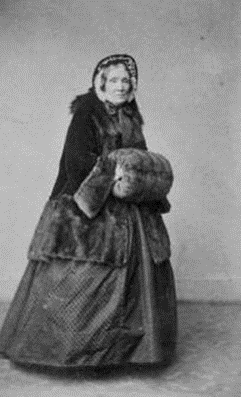
The Lady in Gray, a young woman wearing a gray Civil War era traveling suit, walks though the cemetery, her head bowed and tears falling on the front of her suit. People have seen her making her way through the trees and out of the iron cemetery gates. No one has seen where she goes outside the gates.
Other cemetery visitors have reported fresh flowers appearing on the grave of an unknown soldier,
Civil War reenactors from 1988 reported hearing the sounds of a woman crying and some of them believe it is the Lady in Gray, still mourning a loved one.
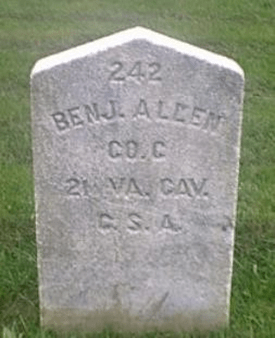
According to Cemetery records, two Confederate soldiers, both Benjamin Allens, sleep in the Camp Chase Confederate Cemetery. Benjamin Allen who was Pvt in Co .C of the 21st Virginia Cavalry of the Confederate States of America, was born on January 30, 1842, and died on September 15, 1864.
The other Benjamin is Benjamin F. Allen who was an infantry private in Co. D of the 50th Tennessee Regiment of the Confederate Army, born on March 18, 1844, in Stewart County, Tennessee, and died on September 8, 1864, at Camp Chase Prison Camp in Columbus, Ohio.

Some observers say that the Lady in Gray weeps in front of the grave of Infantry Private Benjamin F. Allen. What story will she tell to quiet listeners? Will it be about the ordeal of a long train ride from Tennessee north and once she arrived in Columbus, Ohio, a steady search for a hotel room and a friendly face? Or had she been notified of his grave condition before he died and rushed to his side to hold his hand and whisper comforting last words. Was she his sister? His sweetheart? Had they quarreled before he went to war or because he went to war? Her story shimmers in her tears, waiting to be told. AND, who weeps at the grave of the other Benjamin Allen of Company C of the 21st Virginia Cavalry? 4
The story goes that another cemetery ghost places fresh flowers on the grave of an unknown soldier in the Camp Chase Confederate Cemetery. More recently, someone discovered more contemporary plastic flowers on the grave. Time obscures the origin of the flowers, but the act of placing them on a soldier’s grave is as fresh as today and identifies the unknown soldier as honored and mourned.
| Spooky Short Stories Columbus, Ohio. Fort Hayes. The ghost of a young soldier killed in 1865 when he fired a cannon salute for the assassinated President Abraham Lincoln reportedly haunts Fort Hayes in Columbus. The overheated cannon exploded, killing the soldier.The story goes that his ghost still walks because he loved the fort commandant’s daughter and she supposedly knew the cannon would explode. |
4 Ghosts of Ohio, https://www.ghostsofohio.org/lore/ohio_lore_20.html ; Camp Chase Confederate Cemetery.
The Haunted Ohio Fog at Andersonville
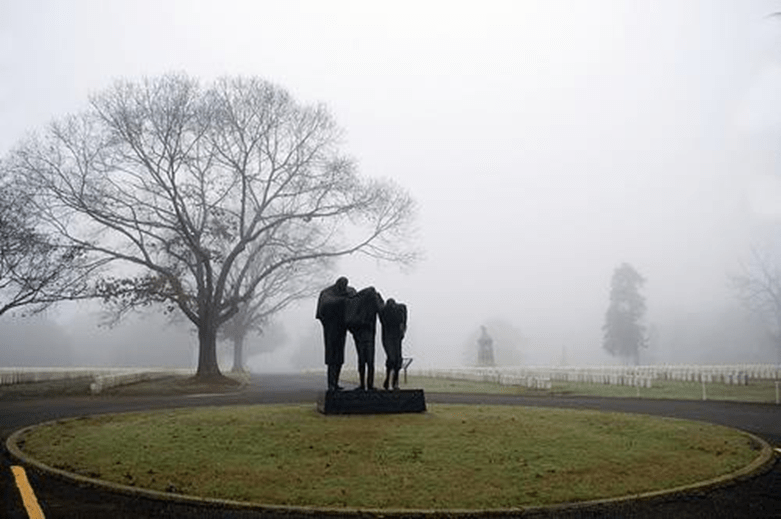
Established on July 26, 1865, the Anderson National Cemetery works to preserve the graves of Union soldiers who died at Andersonville Military Prison. It is located 300 yards northwest of the prison site in southwestern Macon County, Georgia.
A Union prisoner at Andersonville (or Camp Sumter) faced favorable odds of dying and 13,000 Union prisoners of war did just that between 1861 and 1864. No weatherproof shelter existed at Andersonville, just crude tents that offered little protection from the wind, rain, heat or cold. A swamp running through the middle of the prison contributed to the squalid living conditions, including no latrines or clean drinking water, and rampant scurvy, diarrhea, and dysentery. The camp received few food supplies and many of the prisoners starved to death.
The human drama and suffering that took place at Andersonville prison were so indelibly imprinted on the 1860s air that modern visitors can hear the sounds of the prison and the voices of the men who lived and died there. Modern visitors hear the sounds of guns endlessly firing, shouting, whimpers, whispers. The wind blowing across the fields and through the endless rows of tombstones often carries cries of agony. Visitors have seen distinct human figures walking in the surrounding woods and fields and soldier shapes materializing from the fog that often blankets the prison site.
As visitors walk slowly among the tombstones of the National Cemetery at Andersonville, Georgia, some of the ghostly Ohio soldiers whisper identifying statistics.
- Edward Adams of the 2nd Ohio Cavalry, Company C, was captured at Hanover, Virginia on June 1, 1864. He died in Andersonville Prison on August 22, 1864.
- John Ditto of the 51st Ohio Infantry, of the 51st Ohio Infantry, Company A, was captured at Chickamauga on September 20, 1863. He died at Andersonville Prison on September 2, 1864.
- David C. Isham. 8th Ohio Infantry. He was captured at Chickamauga and died on February 4, 1865.
- William Radabaugh., Co. A. 33rd Ohio. He died on June 5, 1864 at age 25.
- Adam Spangler, Jr., Pvt. Co A, 45th Ohio. He died on May 20, 1864, at age 21.
- Lucius M. Wainright, Pvt. Co, G, 89th Ohio Infantry. He died on August 20, 1864 at age 21.
- Andrew J. Zink. Corp. Co. E, 72nd Ohio Infantry. He died on October 21, 1864.
Even though tombstone names, ranks, and other military statistics don’t reveal the human profiles of the ghosts or the contents of their characters or hearts, the personal suffering of the soldiers, their grief and despair that still linger over the Andersonville prison and settle like a wool blanket on the senses of modern visitors. raise important questions, especially this one: How could Americans treat other Americans so inhumanly, even with the excuse of war?5
Spooky Short Stories
In 1970, Andersonville prison and cemetery opened as a National Historical site and many visitors have reported hearing and seeing strange sights on foggy summer nights. The sightings had been reported ninety years before the site opened. One of the female visitors at the site reported talking to a ghost. As she walked through the grounds, she stopped in the middle of a hill to rest. She felt an unseen presence and couldn’t shake off the feeling that someone was watching her.
As she closed her eyes, she heard a voice, but when she looked around she didn’t see anyone. She closed her eyes again and she heard a voice in her head and it seemed to her the voice had something to tell her. “Were you a prisoner here? “Yes,” the voice said. “Did you die here?” she thought.
“Yes,” the voice answered. Before she left, the man told her his name, Andrew Zink, and she asked a staff person to look up Andrew Zink. The staff member found the soldier’s name, Andrew Zink, on the list of Ohio prisoners who had died at Andersonville.
5 Andersonville, prisoner details https://www.nps.gov/civilwar/search-prisoners-andersonville- detail.htm?prisonerId=66127249-1E81-46EA-99B0-125D1C5DA325
National Cemetery at Andersonville, Georgia https://www.findagrave.com/cemetery/32522/andersonville-national- cemetery
Ghosts Around Town
In 1813, Ashtabula citizens started a subscription library with fewer than 100 books. Over the years as the Ashtabula population grew, so did the book list and the need for a designated library building. In 1896, the library was incorporated as the Ashtabula Free Public Library. Local officials used funds from the Andrew Carnegie Library program to construct the library building, located on West 44th Street, in 1903.
The years marched forward to 1953, and changes in the Ohio State law enabled the Ashtabula Free Public Library to become a county district library. Remodeling and expansion in 1958, 1984, 1991, and into the 2000s added a new entrance, elevators, and additional space for books computers, CDs, DVDs, and more people. A fire destroyed the second floor during the one- million-dollar remodeling project in October 1991, and during its 18-month relocation, a Chicago newspaper columnist wrote about the devastating fire. People and organizations nationwide donated over 30,000 books to the Ashtabula County District Library. The renovated building reopened in March 1992.
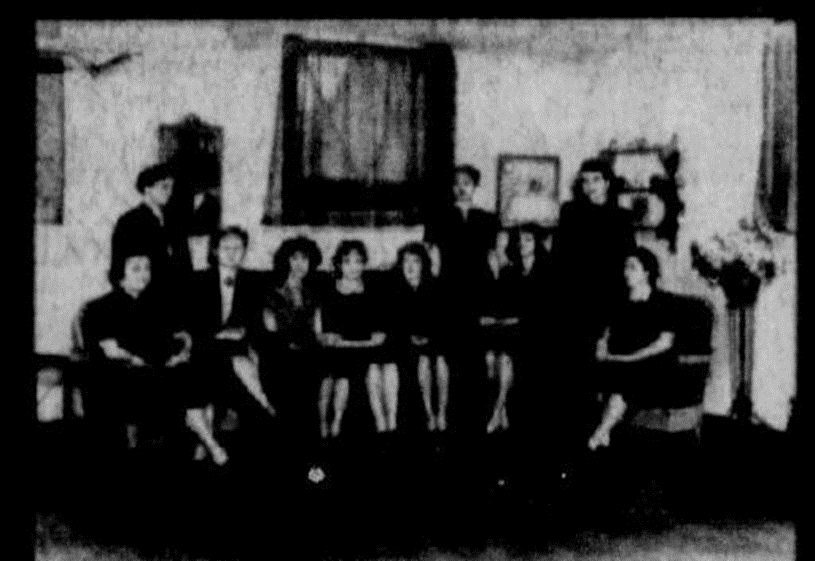
A photo in an Ashtabula Star Beacon story shows head librarian Ethel J. MacDowell and other employees at the Ashtabula County District Library during the 1930s. According to her employees, Ethel, who never married, fashioned her entire life around the library. Her fellow library workers Genevra Durco; Mildred—– ; Beulah May; Agnes Jean Neeley; Charlotte Chapman, Marian Covert (standing); Helen Saterlee;Nellie McDougall; and Elenor Hubbard pose for the photo.
Some ghost listeners and people who knew her believe that Ethel MacDowell has overseen the changes to her library even though she died on November 15, 1970, she and monitors the library closely from her portrait on the wall of the former Ohio Room. Some add the qualification that no, she only haunted the library from 1903, the year the building opened, until the October 1991 fire and renovation Her mission is to ensure that everything is right with her library world, and she still patrols the library to make sure everything is in order. 6
Ethel J. MacDowell’s death certificate shows that her birth date is September 27, 1882 and that she died on November 15, 1970 at age 88. She is buried in Lake Park Cemetery in Rocky River, Ohio. Ethel spent 45 of her life years at the Ashtabula County Library, working her way from assistant to head librarian. People who knew her said that Ethel focused on orderliness and accuracy and toiled to enforce them in the library, her fellow librarians, and to a lesser extent, the library patrons. She almost certainly enforced the standard finger- to- the- lips universal library SHHHHH!
In Ethel’s Ashtabula Library, patrons reported heavy footsteps creeping up antique stairs and apparitions and cold spots regularly occurring in the basement hallway. They said she haunted the old library building, dropping books and relocating book carts and rearranging shelves. She also communicated her opinions about changes in the library. Former Library Director William Tokarcyzk said that Ethel maneuvered her portrait in the Ohio Room to hang crooked when she disapproved of the changes that the library staff made in programs or in the rooms themselves. “It seems like we get more activity from her when we make a significant change such as a renovation or a change in a program which she may not approve,” he noted.
Former Assistant Library Director Donna Wall said that Ethel’s expression on her picture changes and her eyes followed people across the room depending on the happenings at the library and the behavior of the people inside. “No matter where you stand in there, she is looking at you. She is smiling today, but some days her lips are pursed and you know that she isn’t happy about something. “Both Bill and Dona said they didn’t feel threatened by Ethel’s ghost and they agreed that she adds character and mystery to the Ashtabula County Public Library.
| Spooky Short Stories Hinckley, Ohio. Built in 1845, the Hinckley Library served as the home of Vernon Stouffer of the Stouffer Food Company. After it was renovated as a public library in 1973, stories of ghostly sightings in the library circulated along with the library books. Patrons saw a ghostly man and woman on the stars, a workman encountered another ghostly figure in the basement and other people saw ghosts and felt cold spots throughout the library. Some people believe the ghosts are Dr. Nelson Wilcox and his sister Rebecca, who lived in a cabin located on the site before Vernon Stouffer built his house. |
6 “The Sprit of Halloween,” Ashtabula Star Beacon, October 31, 2004, p. 1, The Ashtabula District Library.”
The Madison Seminary
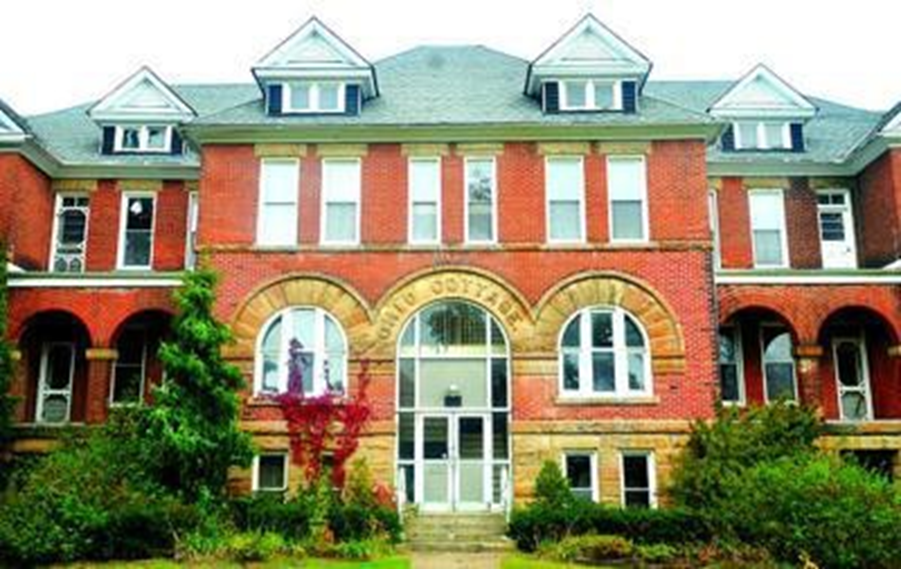
The Madison Seminary, on Middle Ridge Road in Madison, Ohio, is reportedly haunted by a boy named Steven whose father died in the Civil War. He and his mother moved to the Madison Seminary, which at the time served as a GAR home for the families of Civil War veterans.
In 1847, the Madison Seminary began as a small, wooden frame building on Middle Ridge Road in Madison, Ohio, and served students from 1847 until 1891. The Ohio Women’s Relief Corps, the Grand Army of the Republic’s auxiliary, purchased the seminary and on November 10, 1891, it officially became the Madison Home, with the purpose of assisting Army nurses and soldiers’ mothers, wives and sisters who had no means of support after the Civil War.
Through the years the building underwent transformations in style and use and in 1904, the Ohio Women’s Relief Corps donated the building to the State of Ohio because it could no longer to afford to maintain it. The state owned the building for several decades and it is privately owned in the 21st Century.
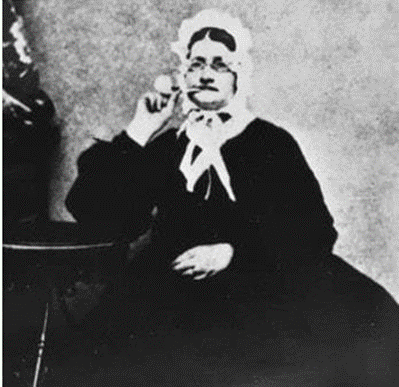
Observers at the GAR Home reported that besides seeing the ghostly boy Steven, they had also observed a woman step out of the closet and stare out the window. Some observers think that the ghostly woman could be Elizabeth Stiles. Elizabeth Stiles opened her eyes to the world in East Ashtabula, Ohio. Her life years between August 21, 1816 and February 14, 1898 took her to Illinois, Kansas and her spying missions for President Abraham Lincoln expanded her travels to other states. She spent the later years of her life with her adopted son and daughter in Fertigs, Pennsylvania and closed her eyes for the last time at the Woman’s Relief Corps home in Madison, Ohio, about ten miles from her birthplace in East Ashtabula.
Throughout her life, Elizabeth faced difficulties, danger, and heartbreak with a steadfast gaze and quick intelligence that enabled her to survive her husband’s murder, spying for the Union, and capture by a Confederate general. She died in the Woman’s Relief Corps home in July 18, 1898, and her family chose adjacent Madison Cemetery as her final resting place.
Some people question whether Elizabeth Stiles is truly resting, arguing that she is instead haunting the halls of Madison Seminary trying to warn modern people about the horrors of Civil War.
| Spooky Short Stories Ghost observers insist that the Wood County Historical Society Museum is haunted. The building served as the Wood County Poor House from 1900 to 1937, and later converted to a nursing home. Staff members experienced doors slamming, someone watching them, and one saw an old lady shuffling down the hallway and vanish. One part of the building served as an insane asylum, and staff members reported sounds of people scratching on doors and one saw a crying retarded boy looking out a window. |
Ghosts of old Tavern, Unionville
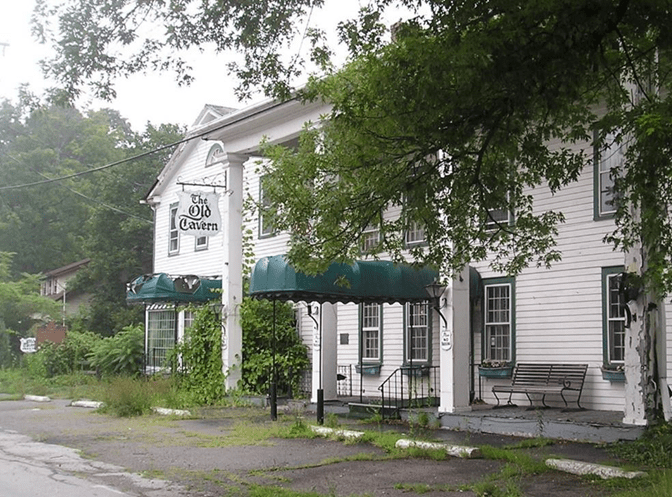
Originally built as two separate log cabins in 1798 before Ohio became a state, the inn’s owners first called it the Webster House. Later, its name was changed to the New England House, the Old Tavern and finally, the Unionville Tavern, after its location in Unionville, Ohio.
Designated the first tavern in Ohio, the Old Tavern functioned as an oaisis for weary travelers navigating the Cleveland-Buffalo Road, present day Route 84, and a local spot for relaxation and revelry. Early settlers navigating the County Line Road in their covered wagons often stopped for rest and relaxation at the Old Tavern. By 1818, it had expanded to a stagecoach and mailstop on the Warren-Cleveland mail route and its owners had converted the cabins into a two-story saltbox style inn featuring a covered carriage entrance, an elegant parlor, and a ballroom.
The Old Tavern had become an active Underground Railroad Station by the mid-Nineteenth Century, with the first floor serving as a hideout for fugitive slaves on their way to Madison Dock and the passage across Lake Erie to freedom in Canada. The fugitives entered the entrance of a tunnel near the Southeast corner of the crossroads where the tavern stood. The tunnel took them under the tavern where they could stand upright and communicate with the innkeeper through a trap door. From the tunnel exit back of the tavern, the fugitive slaves were released or loaded on wagons bound for the Madison Dock and boats waiting to take them across the lake If they needed help on the last legs of their journey, they found protection and help at the homes of Amos and Cyrus Cunningham near Dock road in Madison.7
Recently, on summer nights, people gathered in the Old Tavern garden to listen to and tell ghost stories as part of a restoration of the tavern fund raising campaign. In the back of the crowd, shadows flicker across the lantern light and whispers of song penetrate the voices of the crowd. The whisper voices are singing, “Follow the Drinking Gourd,” and the whispers grow in volume to shouts as the shadows emerge from the tunnel and climb into the waiting wagon that will take them to Dock Road, Canada, and freedom.
7 From History of the Dock Road Arcola Creek Area Madison Township, Ohio 1796 – 1863 By: Sue Orris, Madison Historical Society August 9, 1980.
| Spooky Short StoriesT he “Our House” Tavern, built in 1819 and now a museum inGallipolis, Ohio, has the reputation of being haunted.Volunteers and visitors have reported invisible footsteps in the front hall and a woman singing in an empty ballroom on the second floor. |
| Spooky Short Stories The McConnelsville, Ohio, Opera House is considered to be one of the most haunted theaters in the state. Owners used the building as a stop on the Underground Railroad and renovations in the early 1960s w0ke up some ghosts. Workers reported an invisible woman singing and an equally invisible piano playing. |
Ghosts and Trains
Zaleski, Ohio
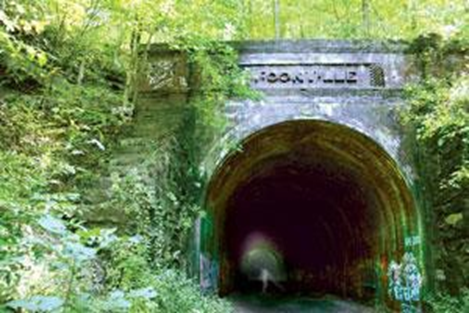
Moonville Tunnel
Over a century ago, Moonville, near Lake Hope State Park in Southeastern Ohio, was one of the many small towns that grew up around the booming iron furnace and coal mining industries.
Today, most are ghost towns, framed in overgrown foliage and crumbled scattered buildings and watched over by their resident ghosts. Moonville’s ghost is as old as the town. The Athens, Ohio messenger published the beginning of his story on November 10, 1880. The story said that Frank Lawhead, engineer on the Marietta & Cincinnati Railroad and the fireman, Charles Kreich were killed instantly when two freight trains ran together near Moonville on the eastern end of the railroad.
The accident happened when a dispatcher failed to notify the east bound train of an order to the west bound train to run on its own time. Both trains were totally wrecked. Shortly after the engineer and fireman were killed, a white ghostly form appeared along the tracks, frightening the engineers operating along the Cincinnati to Marietta route. They reported seeing a white figure swinging a lantern suddenly appear on the tracks.8
Fifteen years later, the Chillicothe Gazette chronicled the continuing pranks of the Moonville Ghost. The Gazette said that on a Monday night in February 1895 the ghost appeared in the railroad cut one half mile east of Moonville. Westbound fast freight No. 99, with engineer William Washburn at the throttle, was speeding along when he spotted the ghost wearing a pure white robe and carrying a lantern. The engineer reported that the ghost had a “flowing white beard, its eyes glistened like balls of fire, and a halo of twinkling stars surrounded it.”9
As the train approached, the ghost swung the lantern across the tracks, and then disappeared.Through the years, countless eyewitnesses also claim to have seen strange lights flitting around the Moonville tunnel in the patterns of a lantern swinging back and forth. Many who have walked the tunnel have felt chills surrounding them at the far end of the tunnel, producing goosebumps on their arms and hair standing up on the backs of their necks. A few have taken pictures of a ghostly man in an engineer hat walking across the tunnel.
8 Athens Messenger, Thursday, Nov 11, 1880
9 Chillicothe Gazette, February, 1895
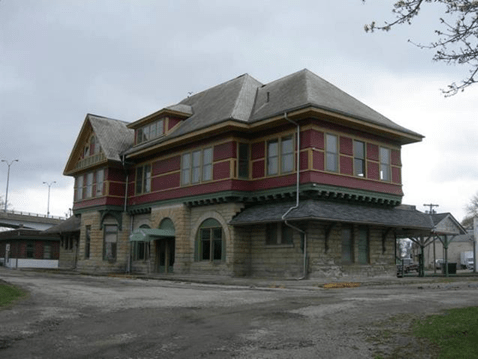
Galion, Ohio. Ghostly trains can be heard approaching and passing the old Big Four Train Depot, with vibrations real enough to shake the building. There is a supposedly haunted room that locals call “the coffin room,” presided over by a man in a long coat. Others swear there is also an evil shadow entity lurking in the room.

Miamiville, Ohio. A railroad man killed during the Civil War is supposed to haunt the railroad tracks.
MIAMIVILLE is a little village on the left, grown up by the location of mills, and the construction of the Railway. MIAMI BRIDGE is about 18 miles from Cincinnati. Here the Railroad passes to the east side of the Miami, and continues on that side for fifty miles. The bridge is a substantial structure, –constructed for a double track-and above high water.
| Spooky Short Stories Arcadia, Ohio. A ghost lantern swimming back and forth over the tracks has stopped many trains passing through Weidler’s Passing Track near Arcadia. When the train stops for the brakeman to investigate, the light disappears into the woods. At other times, the light stays just ahead of the train and when it reaches Weidler’s, the light shoots into the sky. The light is believed to be the ghost of a railroad worker who died in a long-ago accident. |
Ghost Towns and Ghosts
The Quaker Ghost of Hambelton Mill
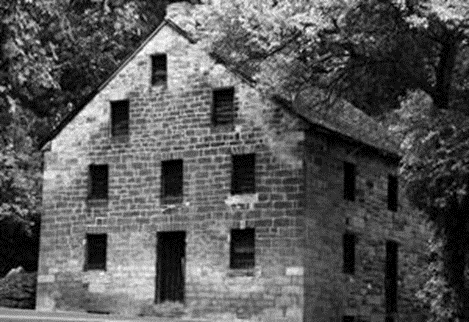
Beavercreek State Park, East Liverpool, Ohio. Sprucevale Trail in Beaver Creek State Park in Northeast Ohio is the site of a ghost town called Sprucevale, a once prosperous village.
In the mid-1800s Sprucevale had a post office, general store, woolen mill, grist mill, a blacksmith shop, and 17 houses. Today, the only evidence of its existence are the remaining three walls of Hambelton’s stone grist mill and the ghost of Quaker preacher Esther Hale.
One version of old mill haunting says that for nearly a century Esther Hale, a Quaker preacher dedicated to persuading people to follow her down the path to salvation, has haunted the old grist mill. Each year her ghost appears dressed in white and she writes her Quaker religious message on the wall of the old mill. Then she leads the way into the mill and disappears.10
The Watchman’s Ghost of the Iron Furnace
The remains of the iron furnace at Lake Hope State Park near Zaleski, Ohio, are the site of a ghost story. During the years the furnace operated as part of the iron mills and coal mine industries of Southeastern Ohio, the furnace had to be guarded day and night for fear that someone might fall into the molten iron. A watchman walked the ledge of the furnace, keeping a sharp eye on the furnace and an equally sharp eye for trespassers.
One stormy night around 8 p.m., as the watchman walked along the edge of the furnace with his lantern, lightning struck. The watchman fell into the hot molten iron. The iron furnace has long since been closed and its crumbling remains not sit along the lake at Lake Hope State Park.
Hikers have reported that during storms with severe lightning, they have seen the glow of a lantern and the silhouette of a watchman carrying a lantern walking around the ledge of the furnace.11
10 Medina County Gazette. October, 25, 1978. Mystery Shrouds Southeast Ohio with Sightings, Tales of Ghost
11 Medina County Gazette. October, 25, 1978. Mystery Shrouds Southeast Ohio with Sightings, Tales of Ghosts
Ghosts at Home
.Malabar Farm, Lucas, Ohio

The story goes that the Rose family had a plain daughter by the name of Ceely Rose, whose peers taunted her and made her life miserable. A farm boy felt sorry for Ceeley and befriended her, but Ceely mistook his friendly gesture for a proposal of marriage. When the embarrassed young man realized that Ceely truly expected a marriage, he told her that her family had asked him to stay away from her. Enraged, Ceely decided to kill her mother, father, and two brothers. She scraped arsenic from some fly paper and put it in her family’s cottage cheese.
A vacant white frame house stands near the main entrance of Louis Bromfield’s Malabar Farm home. A mysterious murder in the home owned by the Rose family, took place in the white frame house in 1896, and resulted in a haunting by a broken-hearted ghost.
The local sheriff eventually trapped Ceely into confessing that she had killed her family and she spent the rest of her life in a mental institution where she died at age 80.
Local residents have reported that on dark nights they have seen the face of a young girl pressed against the window pane of the vacant house. Could it be the ghost of Ceely Rose still searching her old house for her family and her never to be husband?
In 1939, Louis Bromfield an author and Hollywood celebrity bought the property where the Ceeley’s house stood and built a house and adjacent buildings, which he called Malabar Farm. A famous wedding took place at the Malabar farm in 1945, when Lauren Bacall and Humphrey Bogart were married there. Workers and visitors have reported flickering lights and ghostly sightings of Louis Bromfield at the farmhouse.12
12 Medina County Gazette. October, 25, 1978. Mystery Shrouds Southeast Ohio with Sightings, Tales of Ghosts
A Ghost Boy and His Ghost Dog

Dayton, Ohio
. Born in 1855, Johnny Morehouse was the youngest son of Barbara D. and John N. Morehouse and he lived with his parents in Dayton, Ohio in the back of his father’s shoe repair shop.
One day when he was five years old he went out to play near the Miami & Erie Canal and he fell into the water. His dog jumped into the water repeatedly trying to save him, but Johnny froze to death that day in 1860 when he fell into the Canal.
After his burial in Woodland Cemetery in Dayton, Ohio, the dog refused to leave Johnny’s grave, staying close to his young master even after he died. In 1861, Johnny’s parents had a special stone made to commemorate his dog’s devotion. His faithful dog and his toys adorn his tombstone. People have reported seeing them playing in the cemetery at night and the dog can be heard joyfully barking.
| Spooky Short Stories The ghost of Bessie Little is said to haunt the Ridge Street Bridge, Dayton. Her lover killed her and threw her into the Miami River. On quiet clear nights people have reported hearing her body splash into the River and then float above the surface. |
People Tell Ghost Stories
Migrating Tombstone

Rural Mount Union-Pleasant Valley Cemetery in Chillicothe contains “Elizabeth’s grave,” which has earned a certain amount of notoriety. Elizabeth’s headstone reportedly moves itself to the front of the cemetery after visitors move it to the back. Legend says she haunts the cemetery because she hanged herself from a nearby tree and she is unhappy with visitors moving her headstone.
Ghost Hill
Ghost or Cherry Hill is located on State Route 38, Yatesville-Wissler Road, Yatesville, Ohio. There are different versions of why local residents named the site “Ghost Hill.” One version goes that the spirit of a headless horseman stalks people along the roads and fields off State Route 38. This story says that the ghost was a federal agent that local innkeepers murdered because he interfered with their bootleg liquor trade. Another version of the story says that the headless horseman is the ghost of a man that thieves robbed and decapitated. When they went to pretend to discover his body, they couldn’t find it. He has been haunting the area since then, searching for his head.
Headless Civil War Soldier
Yellow Springs, Ohio. Charlie Batdorf, a Civil War soldier, is supposed to be responsible for a headless ghost haunting when several people have seen him walking up the path to his house.
Ghostly Couple
Eaton, Ohio. Eaton-Gettysburg Road. Several people have seen the ghosts of a soldier and his wife walking down the road holding hands. They have also been spotted under a large oak tree growing along the road. Legend has it that Indians killed his wife and drove a stake through her body near the oak tree.
Haunted Museum
Dayton, Ohio. The United States Air Force Museum is supposedly haunted by ghosts who appreciate the Air Force relics on display. Museum guards have reported objects moving by themselves, unexplained voices, and eerie sounds.
Owner Haunts Restaurant
The ghostly owner of The Village House Restaurant in Ashville, Ohio haunts his establishment and plays jokes to keep his staff members attention.
Ghosts Tell People Stories
The Ghosts and Old Peter

An anonymous ghost tells the people story of Old Peter Baines from the past. Old Peter lived alone on the outskirts of Taylorsville, Ohio, for over a decade. He believed more in ghosts than in people, including his neighbors. None of his neighbors paid much attention to Peter until he inherited $15,000 dollars from a family member.
Peter’s inheritance caused five of his neighbors to suddenly focus their feminine attention on Peter.
Miss Nancy Bebee, an old maid of nearly forty had never been married because gossip had it she had no money and no good looks to trade on the marriage market. Miss Prudence Higgins lived with the same circumstances. The Widow Henderson and the Widow Drew fared a little better because they had been comely enough to have married once, but they needed a few thousand dollars to endure their remarriages. Mrs. John White, while still married to a carpenter, had severe aristocratic tastes and not enough money to spend on them. Each of the five ladies created a ghost program agenda to carry out on Peter.
One midnight night before Peter had his inheritance in hand, a relative of Miss Nancy Bebee paid him a visit. He had been sleeping with his window open, so he heard a scratching on the casing. A hallow voice said, “Peter, Miss Nancy Bebee is very unhappy.”
What caused her unhappiness? Peter asked.
The ghost, who identified herself as the ghost of Miss Nancy Bebee’s dead mother, told Peter that he could relieve Miss Nancy’s unhappiness by give her $2,000 as soon as he received his inheritance. “She will marry and she will bless you. Fail not, Peter, lest the smallpox comes to you!” the motherly ghost admonished Peter as she glided away. Peter pledged the money.
On the second night, as Peter lay awake in his bed at midnight, he heard a soft rustling and a cold breeze blew in the window. A scary voice informed Peter that Prudence Higgins was a sad, sad girl who would possibly commit suicide and if she did so, Peter would be to blame. The voice told Peter that he could save the life of Prudence Higgins if he gave her $2,000 dollars. “Do it and live to be a hundred years old,” the ghost told Peter.
Peter told the ghost he would give Prudence the money and asked the ghost to identify itself. The ghost said it was the grandmother of Prudence Higgins and floated out over the pasture gate.
On the third night, Peter stayed awake, waiting for the ghost. The ghost arrived, telling Peter that grim death waited all around him. Peter told the ghost he wanted to live to be one hundred years old, and the ghost told him he would if he gave the Widow Drew $1,000 when he received his inheritance. Peter asked her if $100 would do and the ghost said, “Shall I beckon to death to come and enter this window?”
Peter promised the Widow Drew $1,000 and asked the identity of the ghost. The ghost said she was a gypsy woman who had been murdered. “Do not play me false,” she said as she climbed over the pasture fence. Peter thought he heard cloth ripping, but she had wriggled herself free and disappeared before he could get a closer look.
The next night Peter shut and nailed down the window, reasoning that his inheritance couldn’t afford any more visits from ghosts. When the fourth ghost appeared, announcing that he had to provide for the Widow Henderson or be haunted by evil spirits for the rest of his life, he resisted for a few moments. The persistent sighs and groans from the ghost and scratching on the window glass finally drove Peter to promise the Widow Henderson $1,500 in cash.
On the fifth night, Peter took some blankets and pillows and made his bed under the current bushes in the yard. Ghost number five appeared promptly at midnight, gliding toward his bedroom window. The ghost had pressed itself against the window when four other ghosts surrounded her. The five ghosts stared at each other for a moment, and then human voices began calling names. Human hands and feet moved and five ghosts clawed and scratched each other.
When the scrap had concluded, Peter crawled out of his nest under the current bushes. He discovered five badly torn and tattered bed sheets lying on the grass, along with combs, hairpins, and other ghostly belongings.
None of the ghosts returned to collect their belongings or the cash!13
The Intoxicated Cemetery Ghosts
Someone, maybe the ghosts themselves, had called Cleveland police to report a disturbance in the Lutheran Cemetery at 3 a.m. on a mid-May morning in 1939. When the police officers answering the call pulled up in front of the cemetery, a man ran in front of the car shouting, “There’s ghosts in Lutheran cemetery! I saw them, I tell you. I heard them talking and saw funny lights moving around.!”
Having made his alarming report, the man ran away, terror adding wings to his feet.
The police officers decided to investigate. They found an abandoned sedan at the cemetery gates which they discovered had been forced open. The police officers reasoned that ghosts don’t drive cars nor did they find it necessary to force cemetery gates open to enter or exit, so they were certain they were pursuing non-ghostly human beings. The policemen searched the cemetery, but found neither ghosts or humans, so they decided on a different strategy.
Patrolman Philip Huey, 318 pounds, hid behind a tombstone, while the other two officers left. Soon Patrolman Huey observed three heads emerging from behind three grave stones. Three bodies soon followed the heads, weaving like ghosts in the wind. Officer Huey wasn’t scared, because he had seen the weaving patterns in earlier cases. Officer Huey jumped from behind his tombstone, collared two women and a man, and called for his buddies.
The ghosts explained why they were in the cemetery. “We’re just visiting friends. What if it is three o’clock. What business is it of yours? This is a free country.”
Free county or ghost free country, the three were charged with intoxication.14
Like people, ghosts have the capacity for both good and evil and in-between actions. The ghost hunters who say they encounter evil spirits are likely telling the truth, but then there is the counter of Casper and his human equivalents. Perhaps the Halloween ghosts we see reflect our own personalities all year around.
13 “Ghosts Around.” Vanwert Daily Bulletin. August 10, 1910, page 4.
14 “Cemetery Ghosts Are Charged with Intoxication”. Elyria chronicle, May 13, 1939, page 1

 Onward Octagon Ohio History: Cupola Chronicles